
Albanian Alps vs Swiss Alps: what trekkers actually need to know before they choose.
Same mountains, completely different experience. We compare the Albanian Alps and Swiss Alps on trails, cost, crowds, and access — so you can choose your next trek with clear eyes.
Mountain Trek Specialists · Albania · Last updated May 2026
- Why This Comparison Is Worth Making
- The Trails: Wild vs Managed
- The Scenery: Different Registers of Dramatic
- Difficulty and Fitness Requirements
- Cost: The Number That Changes Everything
- Crowds: The Factor Most Trekkers Underestimate
- Logistics and Access
- Accommodation: Guesthouses vs Mountain Huts
- The Honest Verdict
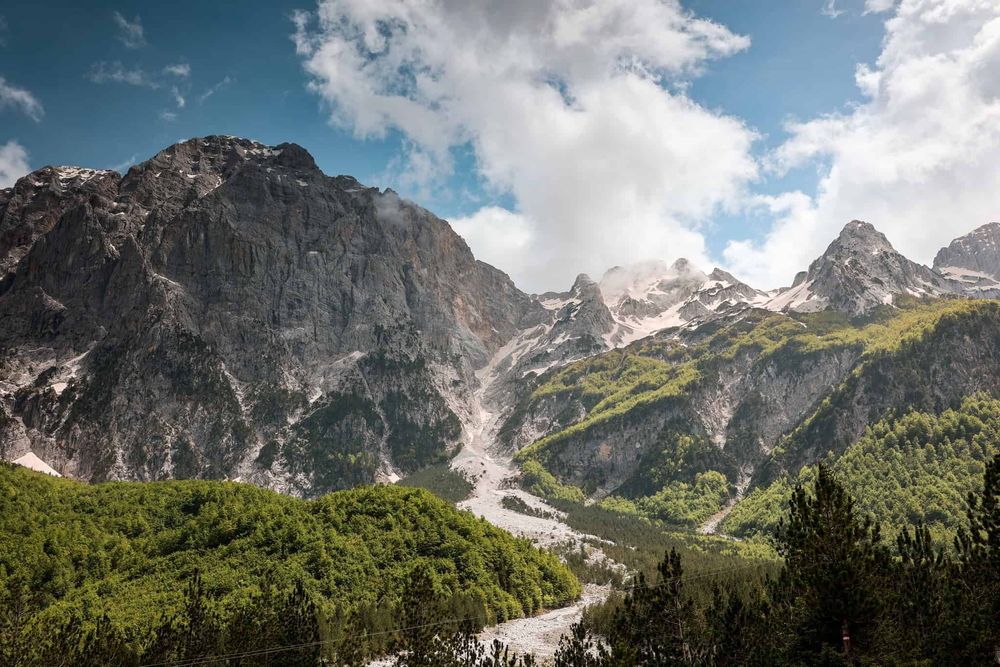
The comparison sounds unlikely until you look at a topographic map. The Albanian Alps and the Swiss Alps are both serious mountain environments with peaks above 2,500 metres, demanding multi-day trails, and scenery that stops experienced hikers in their tracks. The differences between them are real and significant, and understanding those differences is the most useful thing a trekker planning a mountain trip can do before booking. Zenith Travel, Albania's leading tour operator since 1993, takes hikers into the Albanian Alps on a Theth 2-day adventure trip year after year, and this comparison is built on what those hikers tell us when they return.
Why This Comparison Is Worth Making
The Albanian Alps, known locally as Bjeshkët e Namuna or the Accursed Mountains, share a structural similarity with the Swiss Alps that goes beyond marketing language. Both ranges are part of the broader Alpine geological system, both contain glacially carved valleys with steep limestone peaks, and both have established long distance hiking networks that draw international trekkers specifically for multi-day trail experiences.
The Peaks of the Balkans route, which passes through the Albanian Alps across Albania, Kosovo, and Montenegro, has in recent years drawn comparisons with the Tour du Mont Blanc and the Via Alpina in terms of scenery quality and trail character. According to Lonely Planet's ranking of the world's great hiking routes, the Peaks of the Balkans now appears alongside established Alpine classics as one of Europe's most compelling long distance treks.
The comparison is worth making not because the two ranges are equivalent in every dimension, but because trekkers who have done both consistently report that the Albanian Alps deliver a mountain experience the Swiss Alps can no longer provide: genuine wilderness, unmarked terrain, and the specific quality of moving through a landscape that has not yet been optimised for tourism.
The Trails: Wild vs Managed
This is the sharpest difference between the two ranges and the one that matters most to experienced hikers.
Swiss Alpine trails are exceptionally well managed. Signage is comprehensive and reliable, the path surfaces are maintained to a standard that makes navigation in poor visibility straightforward, mountain huts are positioned at regular intervals with hospitality standards equivalent to small hotels, and the rescue infrastructure in the event of an emergency is among the best in the world. Hiking in the Swiss Alps is an experience of controlled excellence.
The Albanian Alps offer something the Swiss Alps cannot. The trails are marked but not manicured. The Theth to Valbona traverse crosses the Valbona Pass at 1,796 metres on a path that feels genuinely earned rather than engineered. The beech forest sections below the treeline have the quality of a wild landscape rather than a managed amenity. The upper sections above the treeline are open, exposed, and demanding in a way that rewards preparation and genuine fitness rather than casual participation.
Neither approach is superior in absolute terms. They suit different trekkers. Hikers who want the certainty of a fully managed mountain infrastructure choose Switzerland. Hikers who want the feeling of genuine mountain wilderness choose Albania.
The Scenery: Different Registers of Dramatic
Both ranges produce extraordinary mountain scenery but in distinctly different visual languages.
The Swiss Alps deliver the postcard version of Alpine drama: snow capped peaks above 4,000 metres, glaciers visible from valley floors, precision villages with flower boxes on every window, and a visual perfection that has been the reference image for mountain scenery in Western culture for two centuries. It is genuinely spectacular and the photographs do not exaggerate it.
The Albanian Alps operate in a rawer register. The peaks are lower, reaching above 2,500 metres rather than 4,000, but they rise with a steepness and directness that the broader Swiss massifs do not always replicate at valley level. The Theth valley enclosed on three sides by vertical limestone ridges, the Shala River running clear and fast across the valley floor, the stone kulla towers standing in the meadows with no visible infrastructure around them — this produces a landscape that feels older and less mediated than anything in Switzerland.
The specific visual quality that experienced trekkers mention most often about the Albanian Alps is the combination of mountain scale and complete absence of tourism infrastructure outside the village. There are no cable cars, no visible ski lifts from summer trails, no manicured viewpoints with information boards. The landscape presents itself without assistance.
Difficulty and Fitness Requirements
The Theth to Valbona traverse, the signature trek of the Albanian Alps, is rated moderate to challenging. The total elevation gain of approximately 900 metres on the ascent and 1,100 metres on the descent over 16 to 18 km requires genuine hiking fitness, appropriate footwear, and the judgment to manage weather changes on the upper ridge. It is not a technical mountaineering route and requires no specialist equipment beyond proper boots and adequate clothing.
Comparable Swiss Alpine treks such as the Tour du Mont Blanc or sections of the Via Alpina require similar or greater fitness levels depending on the stage, with some sections involving significantly more daily elevation gain and longer total distances. The Via Alpina Stage 98 from Kandersteg to Adelboden, for example, involves over 1,400 metres of ascent in a single day on a route that is well marked but physically demanding.
The honest assessment is that the Albanian Alps trail network sits in the same difficulty bracket as the middle grades of Swiss Alpine trekking. What it adds is the psychological demand of a less managed environment where trail conditions, weather changes, and the absence of on-route services require more self-sufficiency than Swiss trails typically demand.
Cost: The Number That Changes Everything
This is where the comparison between the two ranges becomes most consequential for most trekkers.
A week of mountain hiking in Switzerland, including accommodation in mountain huts or valley guesthouses, meals, local transport, and trail fees where applicable, runs at approximately 200 to 350 euros per person per day. According to Switzerland Tourism's official visitor cost guidance, Switzerland consistently ranks among the five most expensive countries in the world for travel spend. A six night Swiss Alpine trek realistically costs 1,200 to 2,100 euros per person before flights.
The same six nights in the Albanian Alps, covering accommodation in Theth valley guesthouses, meals, local transport, and guided trail access, runs at a fraction of that figure. Zenith Travel's guided Theth trip covers transport from Tirana, overnight accommodation, meals, and guided trail access at a price point that represents genuinely exceptional value by any European mountain tourism standard.
For trekkers whose primary constraint is budget, the Albanian Alps do not require compromise on scenery or trail quality. They require only the willingness to go somewhere less familiar.
| Cost Item | Swiss Alps | Albanian Alps |
|---|---|---|
| Accommodation per night | €80–180 | €20–45 |
| Meals per day | €50–90 | €12–22 |
| Local transport | €20–40 | €5–15 |
| Estimated daily total | €150–310 | €37–82 |

Crowds: The Factor Most Trekkers Underestimate
The Tour du Mont Blanc, the most popular Alpine long distance trek, now sees an estimated 10,000 trekkers per year on its busiest stages. Reservations at mountain huts on the TMB must be made months in advance for July and August departures and the most iconic viewpoints along the route are routinely crowded throughout the summer season.
The Theth to Valbona traverse in the Albanian Alps sees a fraction of this traffic. On a busy July weekend in 2026, you might encounter thirty to fifty other hikers across the full day on the trail. On a September weekday, you may meet fewer than ten. The wilderness quality that Swiss trails have largely lost to popularity remains intact in the Albanian Alps in a way that experienced trekkers from Western Europe consistently find striking.
The hikers who come back to Albania are almost always the ones who have already done the Swiss trails and the French trails and the Italian trails, and found something missing. What they find in Theth is what the Alps felt like before everyone knew about them.
Logistics and Access
Switzerland has one of the best transport infrastructures in the world. Getting to the trailhead of any Swiss Alpine route from a major international airport involves a combination of train and post bus services that are reliable, frequent, and comprehensively timetabled. Independent navigation of Swiss Alpine logistics is genuinely straightforward for any experienced traveler.
The Albanian Alps require more planning. The road from Shkodra to Theth crosses mountain terrain that demands a capable vehicle and a driver who knows it. Public transport exists in the form of a single daily furgon during summer months but the scheduling constraints are real. Independent access to the trailhead is possible but requires specific preparation that Swiss trails simply do not demand.
The most practical solution for most international trekkers visiting the Albanian Alps for the first time is a guided trip that handles the transport logistics, removing the most demanding element of the visit and allowing the hiking day itself to be the complete focus.
Accommodation: Guesthouses vs Mountain Huts
Swiss Alpine accommodation is professionally run, reliably comfortable, and priced accordingly. Mountain huts on popular routes provide dormitory or private room options with full meal service and the specific social atmosphere of a busy international trekking route. The standard is consistently high and the experience is predictable in the best sense.
Theth valley accommodation is provided entirely by local families running guesthouses in the traditional Albanian highland hospitality model. The rooms are clean and comfortable, the food is home cooked from locally produced ingredients, and the interaction with the family running the guesthouse is a genuine cultural experience rather than a commercial transaction. The standard has improved considerably over the last five years as international visitors have arrived with higher expectations.
What the Theth guesthouses offer that Swiss mountain huts cannot is the specific quality of staying in a working mountain community rather than a purpose built tourism facility. Waking up in a Theth guesthouse, with the valley walls outside the window and the family preparing breakfast from their own garden, is a different kind of mountain accommodation experience from anything available in Switzerland.
The Honest Verdict
The Swiss Alps win on infrastructure, accessibility, and managed trail quality. They deliver a mountain experience of consistently high standard with minimal logistical challenge and a trail network that has been developed over more than a century of serious Alpine tourism.
The Albanian Alps win on wilderness character, cost, crowd levels, and the specific satisfaction of being somewhere genuinely undiscovered. They deliver a mountain experience that Switzerland delivered fifty years ago and cannot deliver today because of what popularity has done to it.
Trekkers who want certainty, comfort, and a well mapped experience in a legendary mountain environment choose Switzerland. Trekkers who want wilderness, value, and the feeling of arriving before the crowds do choose Albania. The two are not in competition. They serve different versions of what a mountain trekker might be looking for.
According to National Geographic's guide to emerging trekking destinations, the Albanian Alps represent one of the most significant undiscovered trekking opportunities in Europe — a characterisation that aligns precisely with what Zenith Travel's guides observe on the ground every season.
Phone: +355 69 400 0016
Website: visitalbania.zenith.travel