
Albanian Riviera vs Greek Islands: Which Is Right for You in 2026?
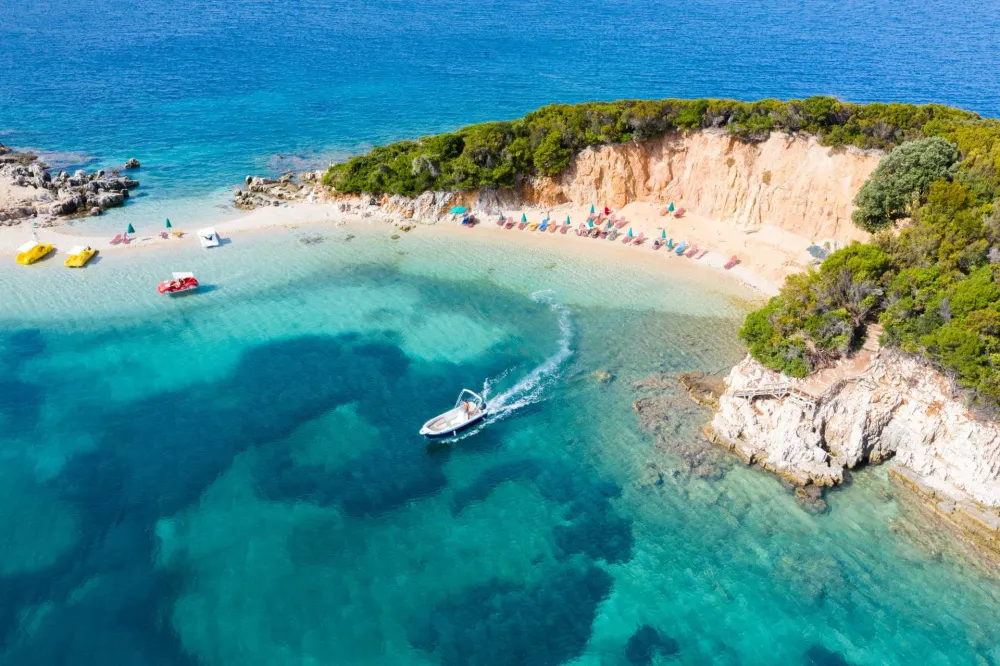
The comparison gets made constantly and for good reason. The Albanian Riviera and the Greek Islands share the same body of water, the same quality of light, and in several stretches virtually the same colour of sea. The difference is in everything else the price, the crowds, the level of development, and the kind of experience each delivers. Zenith Travel, Albania's leading tour operator since 1993, takes travelers along the full length of the Albanian coast on a 6-day guided tour of the Albanian Riviera, and the question we field most often from prospective travelers is exactly this one. Here is the honest answer.
Why This Comparison Matters Now
The Albanian Riviera was largely unknown to international tourism a decade ago. The combination of communist era isolation, poor road infrastructure, and limited accommodation options kept the coastline off the radar of most European travelers even as its Greek neighbours to the south were receiving millions of visitors annually. That has changed significantly since 2018, and by 2026 the Albanian Riviera has established itself as one of the fastest growing beach destinations in Europe.
The comparison with Greece is now unavoidable because the two coastlines share the Ionian Sea and are sometimes separated by only a short ferry crossing. Travelers researching a summer Mediterranean trip routinely consider both options simultaneously. The choice between them is genuinely consequential for the quality of experience you have, so it deserves a thorough answer rather than a promotional one.
The Water: Genuinely Comparable
Start with what both destinations do equally well: the water. The Ionian Sea along the Albanian Riviera runs the same range of blues and greens that makes the Greek islands famous, from pale turquoise shallows to deep indigo offshore. Water clarity on the Albanian coast is in several places arguably superior to comparable Greek beaches because mass tourism infrastructure has not yet degraded it. The beaches at Grama Bay, Ksamil, Dhermi, and Palasa produce water photographs that are indistinguishable from equivalent images shot on Lefkada, Kefalonia, or Corfu.
If your primary criterion is water quality and colour, Albania meets the standard. This is not marketing language. It is what travelers who have visited both coastlines consistently report.
The Crowds: No Comparison
This is where the two destinations diverge most sharply and most consequentially. The Greek islands, particularly the well known ones, are genuinely overcrowded during July and August. Santorini receives over two million visitors annually on an island with a permanent population of around 15,000. Mykonos, Corfu, and Rhodes operate at saturation levels throughout the summer peak. The beach experience at popular Greek island destinations in high summer involves sunloungers arranged in rows at 5 euro per hour, boat party noise, and queues for everything.
The Albanian Riviera in 2026 is busy compared to what it was five years ago but quiet compared to any comparable Mediterranean destination. The most visited beaches like Ksamil and Dhermi see meaningful numbers in July and August, but the scale remains dramatically smaller than the Greek equivalent. Many of the best beaches on the Albanian coast remain uncrowded throughout the entire summer season simply because the access infrastructure has not yet caught up with demand.
For travelers who value the actual experience of a beach rather than the social scene around one, this difference is decisive.
The Price: Albania Wins Completely
Cost comparison between the Albanian Riviera and the Greek islands is not close. Albania is one of the most affordable countries in Europe for travelers. A good seafood dinner for two with wine on the Albanian Riviera costs what a single main course costs at a comparable beachside restaurant on Santorini or Mykonos. Accommodation runs at a fraction of Greek island prices even at the better guesthouses and small hotels. Entry to historical sites, local transport, and incidental spending are all significantly cheaper.
For budget conscious travelers the Albanian Riviera is not just a cheaper alternative to Greece. It is a genuinely different category of affordability that allows a longer, more relaxed trip for the same overall spend. A traveler who budgets for five days in Greece can stay ten days in Albania and eat and drink better for the same money.
The Infrastructure: Greece Has More of It
The honest assessment of Albanian Riviera infrastructure in 2026 is that it is improving rapidly but it is not yet at Greek island standards. The road along the Riviera, the SH8, has been significantly upgraded in recent years but certain stretches remain challenging, particularly in the rain. Accommodation options have expanded considerably but they remain concentrated in a few villages and the total inventory is limited compared to the Greek islands.
Healthcare facilities, international flight connections, ATM availability, and English language signage are all more developed on the major Greek islands than on the Albanian Riviera. Mobile signal is patchy in parts of the Albanian coast. The ferry connections that make island hopping in Greece so seamless have no Albanian equivalent.
For independent travelers accustomed to navigating their own way around well developed tourist destinations, some of this infrastructure gap requires adjustment. For travelers joining an organised tour where transport, accommodation, and logistics are handled, the gap is largely irrelevant to the daily experience.
The History: Albania Has More of It on the Coast
This dimension of the comparison is consistently underestimated by travelers approaching Albania primarily as a beach destination. The Albanian Riviera coastline contains historical sites of extraordinary significance alongside its beaches. Butrint, a UNESCO World Heritage Site near Saranda, is one of the most impressive ancient city ruins in the Balkans, containing Greek, Roman, Byzantine, and Venetian layers in a lakeside setting of exceptional natural beauty. The hilltop village of Himara has an Ottoman era castle above the beach. The Llogara Pass above Dhermi offers views across both the Ionian and Adriatic coasts from a mountain plateau that has been inhabited since antiquity.
Greece has extraordinary history too, but it is largely concentrated inland or on specific historically focused islands. The Albanian Riviera offers beach and significant historical content within the same coastal corridor, which gives a Riviera trip more depth than a purely beach focused itinerary.
The Food: Underrated on Both Sides
Albanian coastal food is built around fresh fish, grilled meat, and the same Ionian Mediterranean flavour profile that defines Greek island cuisine. The difference is the price and the setting. A beachside restaurant on the Albanian Riviera serving grilled sea bream caught that morning, with local salad, fresh bread, and local wine costs a fraction of the equivalent experience in Greece. The food itself is excellent and in the better family run restaurants along the coast it is genuinely outstanding by any Mediterranean standard.
Albanian wine, particularly the local Sheshi i Zi red grape variety grown in the highlands above the coast, is worth exploring specifically. It does not appear on international lists because Albanian wine production is almost entirely consumed domestically, which makes encountering it on the Riviera part of the authentic local experience rather than a compromise.
The Practical Decision Framework
Choose the Greek islands if your priority is established infrastructure, extensive accommodation choice at all price points, reliable international flight connections to a wide range of home countries, and a well mapped social scene with clear expectations of what you will find.
Choose the Albanian Riviera if your priority is water quality without the crowds, genuine affordability, historical depth alongside the beaches, and the specific satisfaction of discovering a place before it becomes fully discovered. Albania in 2026 is at the point where the infrastructure is sufficient for a comfortable trip but the mass tourism transformation has not yet homogenised the experience into something indistinguishable from any other Mediterranean destination.
The travelers who come to the Albanian Riviera and find it does not match their expectations are almost always those who arrived expecting a replica of the Greek island experience at lower cost. The travelers who leave satisfied are those who understood they were visiting something genuinely different, earlier in its tourism development, with the specific textures and unpredictabilities that come with that.
How the 6-Day Tour Resolves the Logistics
The main practical argument for joining an organised tour rather than driving the Albanian Riviera independently is the road and logistics knowledge required to make the most of it. The best beaches require knowing which tracks lead to accessible parking, which boat operators are trustworthy for the sea cave excursions, and which restaurants are worth stopping at versus which ones are coasting on tourist foot traffic. Zenith Travel's 6-day Albanian Riviera tour is built around exactly this knowledge, covering the full length of the coast from the Llogara Pass in the north to Ksamil and Butrint in the south with stops timed to the sites and beaches that consistently produce the best experience.
Plan Your Visit with Zenith Travel
Zenith Travel Agency — Tour Operator Albania Godina 173, Kavaja St 23, Ap 3, Tiranë 1001, Albania Phone: +355 69 400 0016 Website: visitalbania.zenith.travel