
Bunkart 2 in Tirana: The Underground Museum Every Visitor Must See
Right beneath the streets of central Tirana, tucked under one of the city's busiest squares, sits one of the most powerful museums in all of the Balkans. Bunkart 2 is not your average history exhibit with dusty glass cases and faded photographs. It is a full sensory experience that puts you face to face with Albania's communist past in a way that no textbook ever could. Thousands of tourists visit Tirana every year and walk straight past it without knowing it exists. The ones who do go in leave completely changed.
What Exactly Is Bunkart 2 and Where Do You Find It
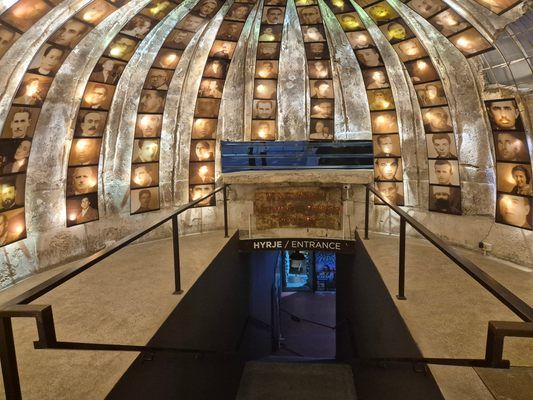
Bunkart 2 opened its doors on 19 November 2016 and sits directly beneath central Tirana on Rruga Abdi Toptani, just 30 seconds on foot from Skanderbeg Square. The entrance is discreet, almost hidden, near the former Ministry of Internal Affairs building. You head down a staircase, pass through heavy metal doors, and find yourself inside a sprawling underground bunker that once served as a secret shelter for Albania's communist leadership. Construction on the bunker started in 1981 and finished in 1986, making it one of the last projects of its kind built under the regime.
The museum covers 1,000 square metres spread across 24 rooms, each one dedicated to a different chapter of Albania's darkest decades. It runs from the end of World War Two all the way through to the fall of communism in 1991. According to the official Bunkart website, the recommended time to fully explore the museum is at least one hour, though most visitors naturally spend closer to 90 minutes.
The Story Behind Albania's Communist Secret Police
The museum focuses heavily on the Sigurimi, which was Albania's feared secret police force during the communist era. The Sigurimi operated under the regime of Enver Hoxha and kept a suffocating grip on every aspect of Albanian life for nearly five decades. They monitored citizens, opened private mail, recruited informants, carried out interrogations, and sent countless innocent people to labor camps and prisons.
Bunkart 2 tells this story head on. It does not soften the facts or wrap things up neatly. The exhibits show original documents, personal testimonies, photographs, and reconstructed rooms that bring the horror of that era to life. Visitors get to see interrogation rooms, surveillance equipment, and the kinds of files the Sigurimi kept on ordinary Albanian citizens. It is heavy material, but it is told with honesty and dignity. The Albanian National Tourism Agency recognises Bunkart 2 as one of the country's most significant cultural sites, and it is easy to see why.
How Bunkart 2 Differs From Bunkart 1
Bunkart 1 is the other famous bunker museum in Tirana, located on the outskirts of the city near Sauk Hill. That one is massive, built inside a huge five-story military bunker designed to shelter government leaders in the event of a nuclear attack. It focuses broadly on 20th century Albanian military history and the political paranoia that drove the country to build over 170,000 bunkers nationwide.
Bunkart 2 is more focused and more personal. Its smaller scale actually makes it feel more intense. The narrow corridors, the low ceilings, and the deliberately atmospheric lighting all work together to make you feel the claustrophobia and fear that defined life under surveillance. Many visitors say Bunkart 2 hits harder emotionally precisely because of how contained and intimate the space feels.
What You See Inside the 24 Rooms
Each room inside Bunkart 2 covers a specific theme or time period. Some rooms focus on political prisoners and the labor camp system. Others highlight the methods the Sigurimi used to spy on citizens, including phone tapping equipment and coded communications. There are sections dedicated to the victims of the regime, with photographs and names given to people who suffered under the system.
One of the most talked about sections covers the relationship between the Albanian communist leadership and foreign powers, including the country's shifting alliances with Yugoslavia, the Soviet Union, and China before Hoxha ultimately cut ties with everyone and declared Albania completely isolated from the rest of the world. This radical isolationism shaped Albanian society in ways that are still felt today, and Bunkart 2 explains it with real clarity.
The exhibits are displayed in Albanian and English, which makes the museum very accessible to international visitors. Personal guides and audio guides in English and Italian are also available if you want extra context during your visit.
Everything You Need to Know Before You Visit
Getting there is easy. Bunkart 2 sits on Rruga Abdi Toptani, a 30-second walk south of Skanderbeg Square. You can reach it on foot from virtually any hotel in central Tirana.
Opening hours run every day from 09:30 to 18:30. Check the official Bunkart website before your visit to confirm any changes around public holidays.
Tickets cost 500 Albanian leke for a standard adult entry. A combined ticket covering both Bunkart 1 and Bunkart 2 is available for 800 leke, saving you 20 percent compared to buying them separately. That combined ticket stays valid for 72 hours, giving you plenty of flexibility across your trip. Personal and audio guides cost extra but are well worth it for the added depth they bring to the experience.
What to wear and bring: comfortable shoes matter here. The bunker floor is uneven in several places, and you will be on your feet for most of the visit. The temperature inside the bunker stays cool year round, so bring a light jacket even if it is warm outside.
Photography is allowed throughout the museum, and the dramatic lighting in certain rooms makes for genuinely striking images. Visiting on a weekday morning tends to be quieter than weekend afternoons when larger groups arrive. If you want the place mostly to yourself, arriving when the doors open at 09:30 is your best move.
Accessibility should be checked directly with the museum before visiting, as the bunker's original structure means some areas involve narrow staircases and uneven surfaces.
Why Bunkart 2 Belongs on Every Tirana Itinerary
Tirana has transformed dramatically over the past 30 years. The city is now colorful, modern, and full of energy. Great restaurants, lively nightlife, and a buzzing arts scene attract travelers from across Europe. It is easy to spend time in Tirana without ever thinking about what happened here before 1991.
Bunkart 2 makes sure you do not forget. It connects the bright, confident Tirana of today to the gray, fearful city it was not so long ago. Visiting the museum gives you a completely different lens through which to see the rest of the city. Pair it with a walk around Skanderbeg Square, a visit to the National History Museum, and an evening in the Blloku district and you have a full day that covers both the past and present of Albania's capital perfectly.
Plan Your Tirana Trip With Zenith Travel
Zenith Travel has been helping travelers discover the best of Albania since 1993. Whether you want a guided Tirana city tour that includes Bunkart 2 or a longer Albanian adventure that takes you through the Riviera, the Alps, and the historic cities of Berat and Gjirokaster, the team at Zenith Travel builds the perfect trip for you. You can also explore more Albanian attractions through Visit Albania to get inspired before you go. Contact us at Godina 173, Kavaja St 23, Ap 3, Tiranë 1001, or call 069 400 0016 to start planning today.