Kruje
Historical Sites
.jpg&w=3840&q=75)
Essential Info
About
Kruja Albania: The Legendary Fortress Town of Skanderbeg
Kruja Albania stands as one of the most historically significant destinations in the country, perched dramatically on a mountainside just 32 kilometers north of Tirana. This ancient fortress town embodies Albanian resistance, national pride, and centuries of cultural heritage, making it an essential destination for anyone seeking to understand Albania's identity and spirit.
The Birthplace of Albanian Resistance
Kruja holds an unparalleled place in Albanian history as the stronghold of Gjergj Kastrioti Skënderbeu, the national hero who defended Albania against Ottoman invasion for 25 years during the 15th century. The town's strategic position on Mount Kruja, overlooking the coastal plains below, made it virtually impregnable to siege. From 1443 to 1468, Skanderbeg used Kruja as his base of operations, successfully repelling numerous Ottoman attacks and earning legendary status throughout Europe as the "Dragon of Albania."
The fortress's remarkable defensive success symbolizes Albanian determination and resistance, qualities that continue to define the nation's character. Today, Kruja Albania attracts visitors from around the world who come to walk the same paths as Skanderbeg and experience the living history of Albanian independence.
Kruja holds an unparalleled place in Albanian history as the stronghold of Gjergj Kastrioti Skënderbeu, the national hero who defended Albania against Ottoman invasion for 25 years during the 15th century. The town's strategic position on Mount Kruja, overlooking the coastal plains below, made it virtually impregnable to siege. From 1443 to 1468, Skanderbeg used Kruja as his base of operations, successfully repelling numerous Ottoman attacks and earning legendary status throughout Europe as the "Dragon of Albania."
The fortress's remarkable defensive success symbolizes Albanian determination and resistance, qualities that continue to define the nation's character. Today, Kruja Albania attracts visitors from around the world who come to walk the same paths as Skanderbeg and experience the living history of Albanian independence.
Kruja Castle: A Monument to National Identity
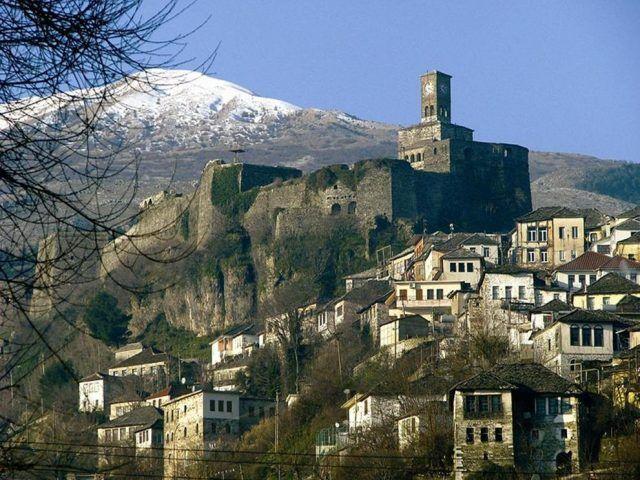
Dominating the town's skyline, Kruja Castle represents Albania's most iconic medieval fortress. The castle complex houses the Skanderbeg Museum, established in 1982 and designed by renowned Albanian architect Pranvera Hoxha. The museum's distinctive architecture evokes medieval Albanian towers while providing modern exhibition spaces that chronicle Skanderbeg's life, military campaigns, and lasting legacy.
Inside the castle walls, visitors discover original Ottoman-era fortifications, ancient water cisterns, and panoramic viewpoints offering breathtaking vistas across the Adriatic coast. The castle grounds also contain the Ethnographic Museum, housed in a beautifully preserved Ottoman-period home that once belonged to the affluent Toptani family, offering insights into traditional Albanian life during the 18th and 19th centuries.
Dominating the town's skyline, Kruja Castle represents Albania's most iconic medieval fortress. The castle complex houses the Skanderbeg Museum, established in 1982 and designed by renowned Albanian architect Pranvera Hoxha. The museum's distinctive architecture evokes medieval Albanian towers while providing modern exhibition spaces that chronicle Skanderbeg's life, military campaigns, and lasting legacy.
Inside the castle walls, visitors discover original Ottoman-era fortifications, ancient water cisterns, and panoramic viewpoints offering breathtaking vistas across the Adriatic coast. The castle grounds also contain the Ethnographic Museum, housed in a beautifully preserved Ottoman-period home that once belonged to the affluent Toptani family, offering insights into traditional Albanian life during the 18th and 19th centuries.
The Historic Old Bazaar
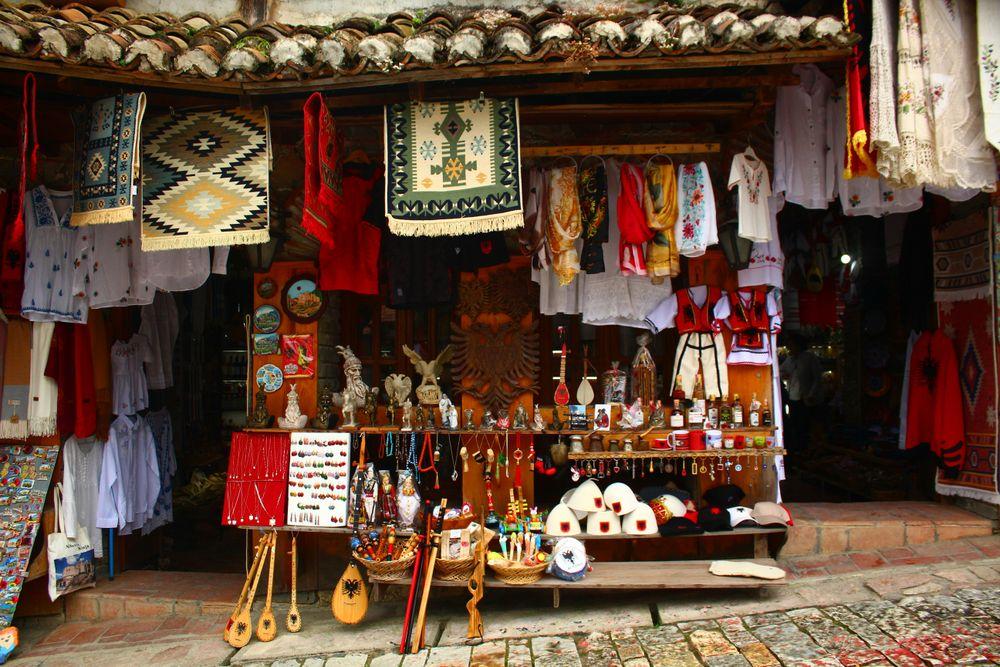
Beyond the castle, Kruja's restored Old Bazaar transports visitors to Albania's Ottoman period with its cobblestone pathways and traditional wooden shops. This atmospheric marketplace, one of Albania's oldest continuously operating bazaars, showcases authentic Albanian craftsmanship including handwoven rugs, copper work, traditional clothing, and antiques. Local artisans continue centuries-old traditions, creating unique souvenirs that reflect genuine Albanian heritage rather than mass-produced tourist items.
The bazaar serves not just as a shopping destination but as a living museum where visitors witness traditional crafts being practiced using techniques passed down through generations. The sound of copper being hammered, the sight of weavers at their looms, and the aroma of traditional Albanian cuisine create an immersive cultural experience.
Beyond the castle, Kruja's restored Old Bazaar transports visitors to Albania's Ottoman period with its cobblestone pathways and traditional wooden shops. This atmospheric marketplace, one of Albania's oldest continuously operating bazaars, showcases authentic Albanian craftsmanship including handwoven rugs, copper work, traditional clothing, and antiques. Local artisans continue centuries-old traditions, creating unique souvenirs that reflect genuine Albanian heritage rather than mass-produced tourist items.
The bazaar serves not just as a shopping destination but as a living museum where visitors witness traditional crafts being practiced using techniques passed down through generations. The sound of copper being hammered, the sight of weavers at their looms, and the aroma of traditional Albanian cuisine create an immersive cultural experience.
Natural Beauty and Surrounding Attractions
Kruja's location on the slopes of Mount Kruja provides stunning natural scenery alongside its historical attractions. The surrounding landscape features hiking trails through pine forests, natural springs, and viewpoints offering spectacular sunsets over the Adriatic Sea. The town's elevation creates a pleasant microclimate, making it an ideal escape from Tirana's summer heat.
Just below the main fortress area, visitors find numerous traditional restaurants serving authentic Albanian mountain cuisine, including specialties like tave kosi (baked lamb with yogurt), fërgesë (pepper and cheese casserole), and qifqi (rice balls from nearby Gjirokastra). These family-run establishments often occupy restored Ottoman-era buildings, providing both culinary and architectural experiences.
Kruja's location on the slopes of Mount Kruja provides stunning natural scenery alongside its historical attractions. The surrounding landscape features hiking trails through pine forests, natural springs, and viewpoints offering spectacular sunsets over the Adriatic Sea. The town's elevation creates a pleasant microclimate, making it an ideal escape from Tirana's summer heat.
Just below the main fortress area, visitors find numerous traditional restaurants serving authentic Albanian mountain cuisine, including specialties like tave kosi (baked lamb with yogurt), fërgesë (pepper and cheese casserole), and qifqi (rice balls from nearby Gjirokastra). These family-run establishments often occupy restored Ottoman-era buildings, providing both culinary and architectural experiences.
Cultural Significance and Modern Relevance
Kruja Albania continues to play a vital role in Albanian national consciousness. The town hosts numerous cultural events throughout the year, including Independence Day celebrations on November 28th and Flag Day on November 28th, when thousands gather at the castle to honor Skanderbeg's legacy and Albanian sovereignty. These events feature traditional music, folk dances, and historical reenactments that bring Albanian history to life.
The town has also become an important center for Albanian cultural preservation, with ongoing efforts to maintain traditional crafts, restore historical buildings, and document local customs. Educational programs bring Albanian schoolchildren to Kruja to learn about their national heritage, ensuring that Skanderbeg's story and the values of resistance and independence continue inspiring future generations.
Kruja Albania continues to play a vital role in Albanian national consciousness. The town hosts numerous cultural events throughout the year, including Independence Day celebrations on November 28th and Flag Day on November 28th, when thousands gather at the castle to honor Skanderbeg's legacy and Albanian sovereignty. These events feature traditional music, folk dances, and historical reenactments that bring Albanian history to life.
The town has also become an important center for Albanian cultural preservation, with ongoing efforts to maintain traditional crafts, restore historical buildings, and document local customs. Educational programs bring Albanian schoolchildren to Kruja to learn about their national heritage, ensuring that Skanderbeg's story and the values of resistance and independence continue inspiring future generations.
Practical Visitor Information
Located just 45 minutes from Tirana by road, Kruja makes an ideal day trip or overnight destination. The town's compact historic center allows visitors to explore major attractions within a few hours, though history enthusiasts often spend a full day absorbing the museum collections and atmospheric surroundings. Spring and autumn offer the most pleasant weather for visiting, though the castle and bazaar operate year-round.
The Skanderbeg Museum maintains regular opening hours and offers guided tours in multiple languages, providing detailed context about Albania's medieval period and Ottoman resistance. The castle grounds are accessible and provide excellent photography opportunities, particularly during golden hour when sunlight illuminates the ancient stones and distant mountains.
Located just 45 minutes from Tirana by road, Kruja makes an ideal day trip or overnight destination. The town's compact historic center allows visitors to explore major attractions within a few hours, though history enthusiasts often spend a full day absorbing the museum collections and atmospheric surroundings. Spring and autumn offer the most pleasant weather for visiting, though the castle and bazaar operate year-round.
The Skanderbeg Museum maintains regular opening hours and offers guided tours in multiple languages, providing detailed context about Albania's medieval period and Ottoman resistance. The castle grounds are accessible and provide excellent photography opportunities, particularly during golden hour when sunlight illuminates the ancient stones and distant mountains.
A Living Testament to Albanian Spirit
Today's Kruja Albania successfully balances historical preservation with modern tourism development. The town has carefully maintained its authentic character while providing visitor facilities, resulting in an experience that feels genuine rather than commercialized. Unlike many fortress towns that exist primarily as tourist attractions, Kruja remains a living community where residents continue traditional lifestyles alongside welcoming international visitors.
For travelers seeking to understand Albanian history, culture, and national identity, Kruja offers unparalleled insights. The town represents not merely a historical site but the very foundation of Albanian statehood and the enduring spirit that has allowed this small nation to maintain its unique identity despite centuries of foreign pressure. Walking through Kruja's ancient streets and castle walls, visitors connect directly with the events and personalities that shaped Albania's destiny.
To learn more about Skanderbeg's historical significance and his recognition throughout European history, visit the comprehensive historical documentation at Encyclopaedia Britannica's entry on Skanderbeg, which provides authoritative context about his military campaigns and lasting legacy in Albanian and European history.
Today's Kruja Albania successfully balances historical preservation with modern tourism development. The town has carefully maintained its authentic character while providing visitor facilities, resulting in an experience that feels genuine rather than commercialized. Unlike many fortress towns that exist primarily as tourist attractions, Kruja remains a living community where residents continue traditional lifestyles alongside welcoming international visitors.
For travelers seeking to understand Albanian history, culture, and national identity, Kruja offers unparalleled insights. The town represents not merely a historical site but the very foundation of Albanian statehood and the enduring spirit that has allowed this small nation to maintain its unique identity despite centuries of foreign pressure. Walking through Kruja's ancient streets and castle walls, visitors connect directly with the events and personalities that shaped Albania's destiny.
To learn more about Skanderbeg's historical significance and his recognition throughout European history, visit the comprehensive historical documentation at Encyclopaedia Britannica's entry on Skanderbeg, which provides authoritative context about his military campaigns and lasting legacy in Albanian and European history.
Explore More Historical Sites
Uncover more historical sites spots that intrigue you.