
The Albanian Alps
Parks & Nature
.jpeg&w=1920&q=75)
.jpeg&w=1920&q=75)
Essential Info
About
The Albanian Alps: Europe's Last Great Wilderness and Hiking Paradisee
Discover the Albanian Alps, Europe's most spectacular undiscovered mountain range where jagged limestone peaks, pristine valleys, and ancient traditions create an adventure unlike anywhere else. This complete 2025 guide reveals everything you need to know about exploring the Accursed Mountains—from the legendary Valbona to Theth trek to remote villages frozen in time.
Europe's Best-Kept Mountain Secret
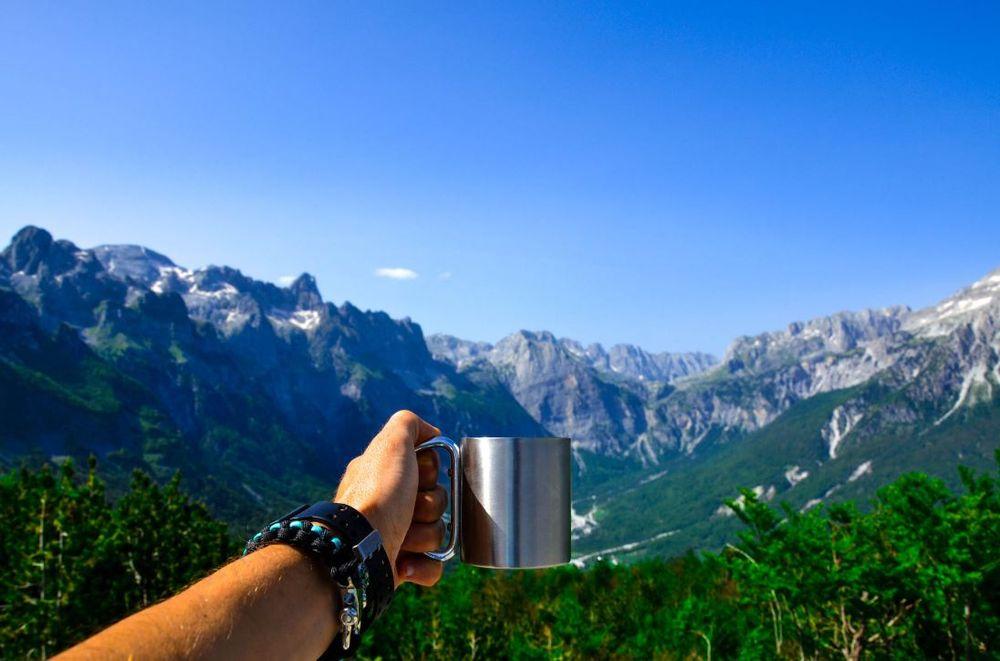
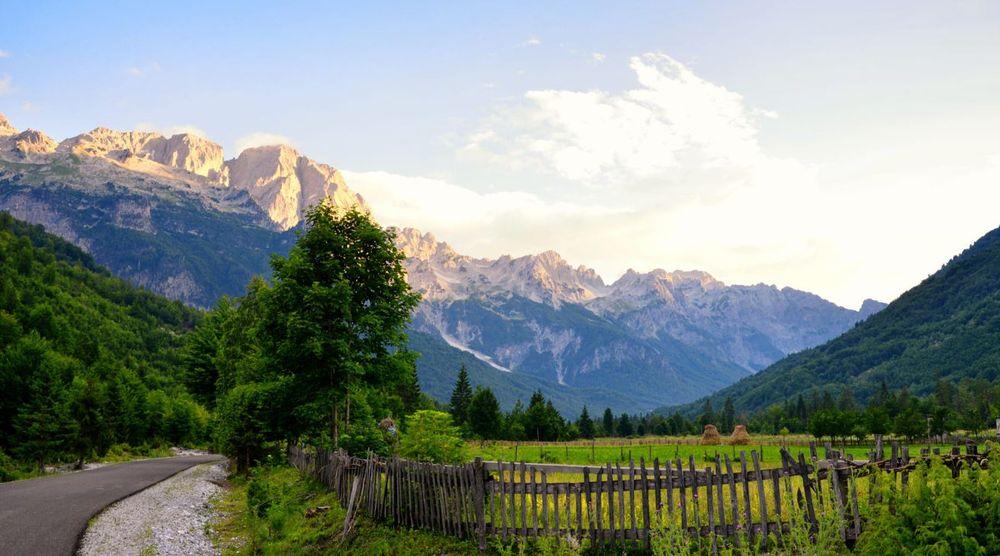
The Albanian Alps—locally known as Bjeshkët e Nemuna (the Accursed Mountains)—represent one of Europe's last true wilderness areas. Rising dramatically in northern Albania near the borders with Montenegro and Kosovo, these razor-sharp limestone peaks, deep river valleys, and remote mountain villages offer adventurers an experience that feels increasingly impossible to find in modern Europe: authentic wilderness without the crowds.
Part of the Dinaric Alps system stretching along the Adriatic coast, this mountain range distinguishes itself through raw, untamed character. Unlike the heavily developed peaks of Switzerland, Austria, or France, these mountains remain largely unchanged by mass tourism. Stone villages cling to valley floors, centuries-old traditions persist in daily life, and hiking trails lead through landscapes where bears and wolves still roam freely.
The region encompasses several protected areas including the Albanian Alps National Park, Valbona Valley National Park, and Theth National Park. Together, these preserves protect an extraordinary mosaic of ecosystems—alpine meadows bursting with wildflowers, dense beech and pine forests, glacial lakes reflecting mountain peaks, and rushing rivers carving through ancient limestone. According to UNESCO, the area holds exceptional natural and cultural value, representing one of Europe's most significant mountain wilderness regions.
Albania is one of the few European countries blessed with true Alps. Most of the country's highest peaks concentrate here, with Mount Jezerca (2,694m) standing as Albania's second-highest peak after Mount Korab (2,751m) in the northeast. The terrain's dramatic verticality creates some of the Balkans' most spectacular scenery—sheer rock faces soaring thousands of meters, narrow valleys carved over millennia, and panoramic vistas that stretch across three countries.
Geography and Natural Wonders
Mountain Landscapes
The north Albanian Alps are characterized by distinctive karst limestone formations creating the region's signature jagged peaks and dramatic topography. Glacial activity during the ice ages sculpted U-shaped valleys, cirques, and hanging valleys that define the landscape today. The mountains' geology creates numerous caves, underground rivers, and natural springs that feed the region's pristine waterways.
Key Geographic Features:
Elevation range: 300m in valley floors to 2,694m at Jezerca peak
Climate zones: Mediterranean valleys transitioning to alpine conditions above 1,500m
Major rivers: Valbona, Shala, Kir, and Cem rivers originating in these mountains
Protected area: Over 8,000 hectares of national parks and reserves
Flora and Fauna
This wilderness harbors extraordinary biodiversity. Dense forests of beech, fir, pine, and the rare Balkan pine (Hormoq tree) blanket lower elevations. Higher up, alpine meadows explode with wildflowers in spring and summer—orchids, gentians, and endemic species found nowhere else.
The region supports remarkable wildlife. Brown bears, grey wolves, Balkan lynx, wild boars, and chamois inhabit these mountains. The skies host golden eagles, peregrine falcons, and numerous endemic bird species. Crystal-clear mountain streams and rivers teem with wild trout—a delicacy in local cuisine. According to Lonely Planet, this area represents one of Europe's most important biodiversity hotspots, serving as a crucial refuge for species that have disappeared from more developed mountain regions.
Notable species include:
Balkan lynx (critically endangered)
Brown bear (healthy populations)
Grey wolf (thriving in remote areas)
Chamois (mountain goats on rocky cliffs)
Wild trout (crystal-clear rivers)
Over 100 endemic plant species
Valbona Valley: Heart of the Mountains
Discovering Valbona Valley National Park
The Valbona River Valley ranks among Albania's most stunning natural areas. Located approximately 22 kilometers from Bajram Curri, the valley stretches deep into the heart of the mountains, following the turquoise Valbona River as it carves through towering limestone walls. This is where many hikers base themselves for exploring the region.
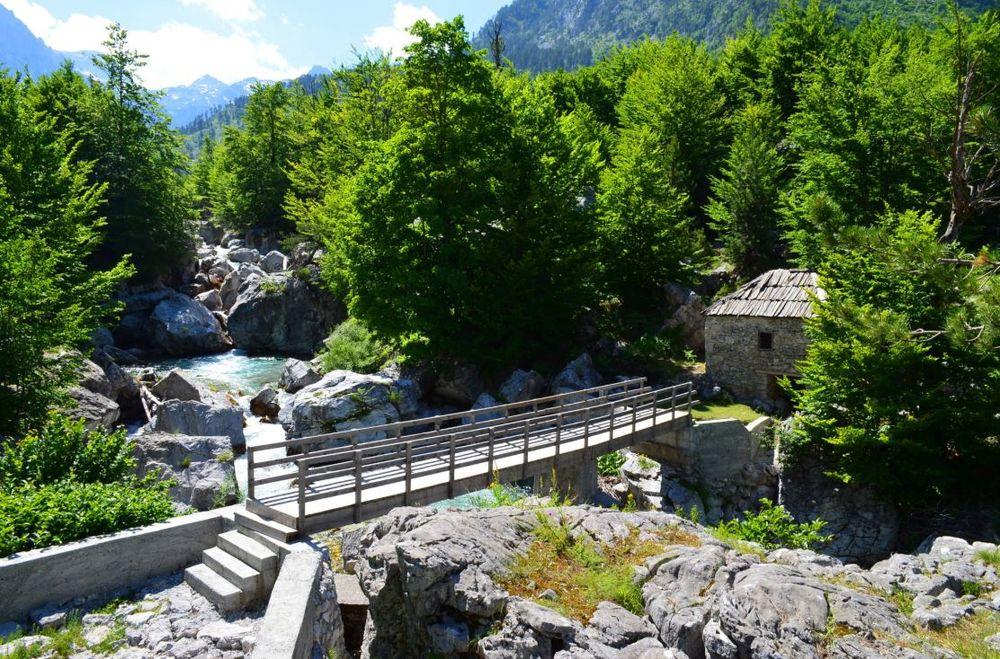
The valley presents a fairy-tale landscape of traditional stone houses set against a backdrop of soaring peaks. Villages like Dragobia, Rrogam, and Valbona village itself maintain centuries-old lifestyles, with locals practicing subsistence farming, shepherding, and mountain hospitality that has welcomed travelers for generations.
Dragobia: Gateway to the Valley
The first village with alpine-style houses you'll encounter is Dragobia, situated at the valley's lower end. Here, where the Cerem stream flows into the Valbona River, you'll find the historic Dragobia Cave. This cave holds national significance as the place where Albanian hero Bajram Curri was surrounded and killed during Albania's turbulent early 20th-century conflicts. The city of Bajram Curri, the regional center, was named in his honor.
Valbona Village: Mountain Hospitality
Valbona village sits 25 kilometers from Bajram Curri, serving as the valley's main settlement and hiking hub. Traditional guesthouses line the valley floor, offering authentic mountain hospitality. Staying with local families provides insight into centuries-old customs and the opportunity to taste regional specialties.
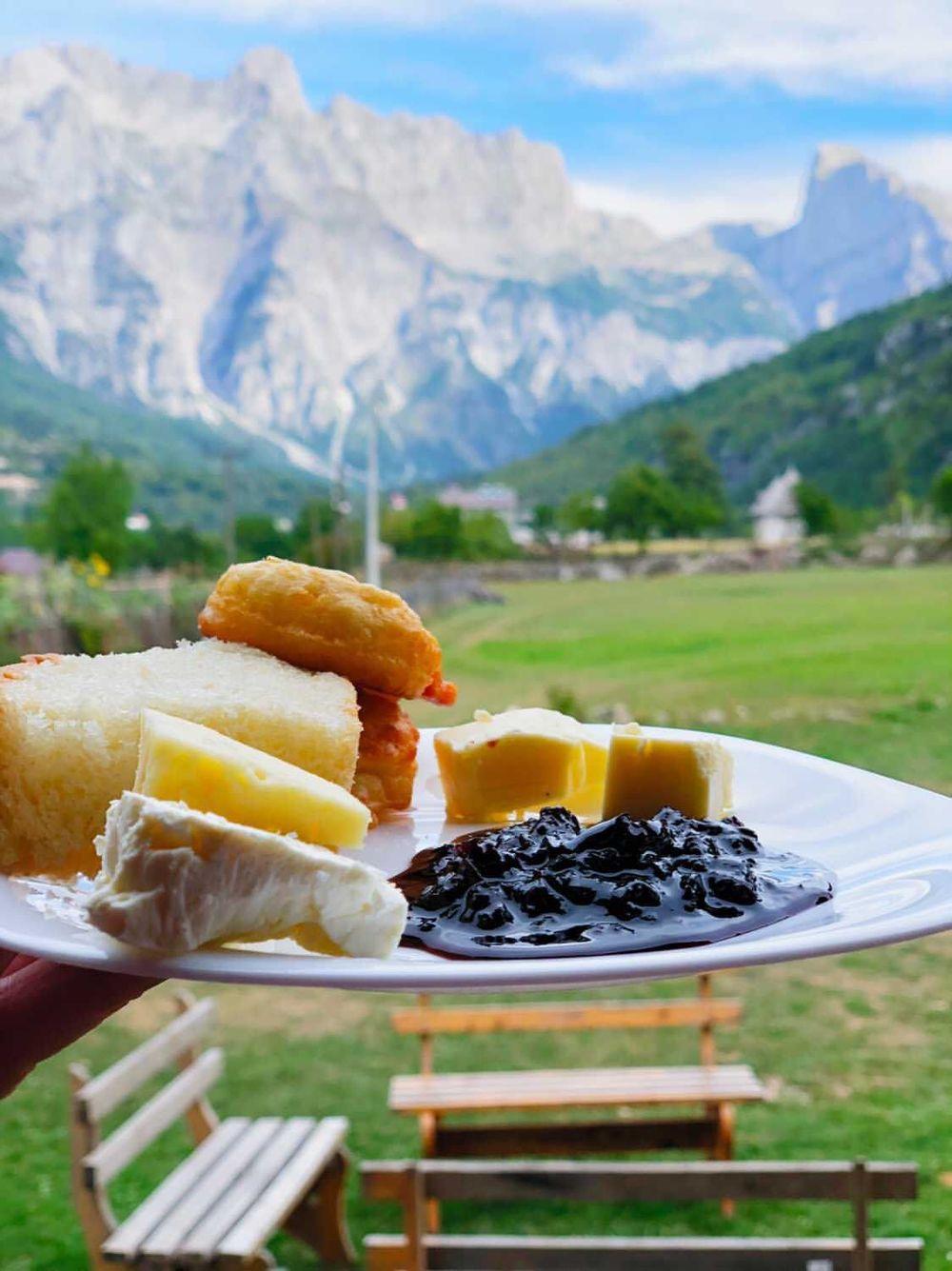
Regional Cuisine:
Mazja – Traditional corn-based dish
Flija – Multi-layered pancake cooked on open hearth, served with mountain honey
Pitja – Savory mountain pie
Wild trout – Fresh from mountain streams
Local cheeses and yogurt – Made from sheep and cow milk
The valley changes dramatically with seasons. Spring brings wildflowers carpeting the meadows and snowmelt swelling the river. Summer offers perfect hiking weather with warm days and cool nights. Autumn paints the forests in gold and crimson. Winter blankets everything in deep snow—often reaching 100 centimeters creating a wonderland for winter sports from November through May.
Theth Valley: Albania's Most Famous Mountain Village
Theth Valley feels like stepping back in time. Stone houses with wooden shingle roofs cluster in the valley bottom, surrounded by towering peaks on all sides. The village maintains traditional architecture and customs that have remained largely unchanged for centuries. This preservation of authenticity—combined with stunning natural beauty—has made Theth the region's most photographed and visited destination.
Key attractions in Theth:
The Lock-in Tower (Kulla e Ngujimit): This fascinating stone tower represents Albania's historical kanun law system and the practice of blood feuds. Families involved in feuds would "lock themselves in" these towers for protection. The restored tower now functions as a small museum explaining this complex cultural tradition.
Theth Church: The iconic white Catholic church with its distinctive bell tower has become the valley's symbol, appearing in countless photographs framed by dramatic mountain peaks.
Blue Eye of Theth (Syri i Kaltër): A stunning natural spring where crystal-clear blue water emerges from the mountain, creating a mesmerizing pool. The 45-minute hike from the village center is easy and rewarding.
Grunas Waterfall: This impressive waterfall cascades into a natural pool surrounded by lush forest. The 40-minute hike offers beautiful valley views along the way.
Theth Canyon: A dramatic gorge with steep limestone walls where adventurous visitors can explore the river's course.
More Mountain Adventures
Vermoshi: Albania's Northernmost Village
Located at the country's northernmost tip, 95 kilometers from Shkodër in the Kelmend region, Vermoshi sits on an alpine plateau 1,100 meters above sea level. This remote village offers pristine nature and authentic mountain life even more isolated than Theth or Valbona.
The journey to Vermoshi takes you through the dramatic Rrapsh Pass, where you'll see the crystal-clear Cem River creating stunning contrasts with the surrounding landscape. During summer, the river banks become popular swimming and sunbathing spots.
Razma and Boga: Western Peaks
The western peaks, accessible from Shkodër via a different route than Theth, offer additional exploration opportunities. Razma, located on a hill with blackberry bushes at Veleçik's foot, sits among lush pine and fir forests. Alpine pastures and meadows create mesmerizing landscapes.
Boga village, famously described by British traveler Edith Durham in her book "High Albania," was where wealthy Shkodër families built mountain villas before World War II. The village offers excellent mountain climbing, skiing, and cave exploration opportunities.
Why These Mountains Should Be Your Next Adventure
The Albanian Alps represent something increasingly precious in modern Europe: genuine wilderness accessible to ordinary adventurers, not just extreme mountaineers. These mountains haven't been groomed for tourism—there are no cable cars, luxury resorts, or manicured trails. What you find instead is raw, authentic mountain experience.
The valleys still harbor traditional ways of life largely unchanged for centuries. Shepherds still move livestock to summer pastures, families still welcome strangers with remarkable hospitality, and ancient customs persist in daily life. This cultural authenticity, combined with spectacular natural beauty, creates an experience that feels impossible to find elsewhere in Europe.
For hikers, the region offers challenges and rewards on par with more famous ranges—dramatic peaks, pristine wilderness, and the satisfaction of crossing mountain passes on foot—without the crowds that plague the Swiss or Austrian Alps. For photographers, every valley and vista presents images unchanged by development. For those seeking authentic cultural experiences, the mountain villages provide genuine interaction with traditional lifestyles.
These peaks are being "discovered" by international travelers, but they remain wonderfully under-the-radar compared to Europe's famous mountain destinations. Visit now, while these mountains still offer the rare experience of wilderness, authenticity, and adventure in their purest forms.
Your Mountain Journey Begins
Whether you're planning the classic Valbona to Theth trek, a multi-day expedition through remote peaks, a cultural immersion in mountain villages, or simply seeking to experience Europe's last great wilderness—the Albanian Alps await. These are mountains that challenge, inspire, and reward in equal measure.
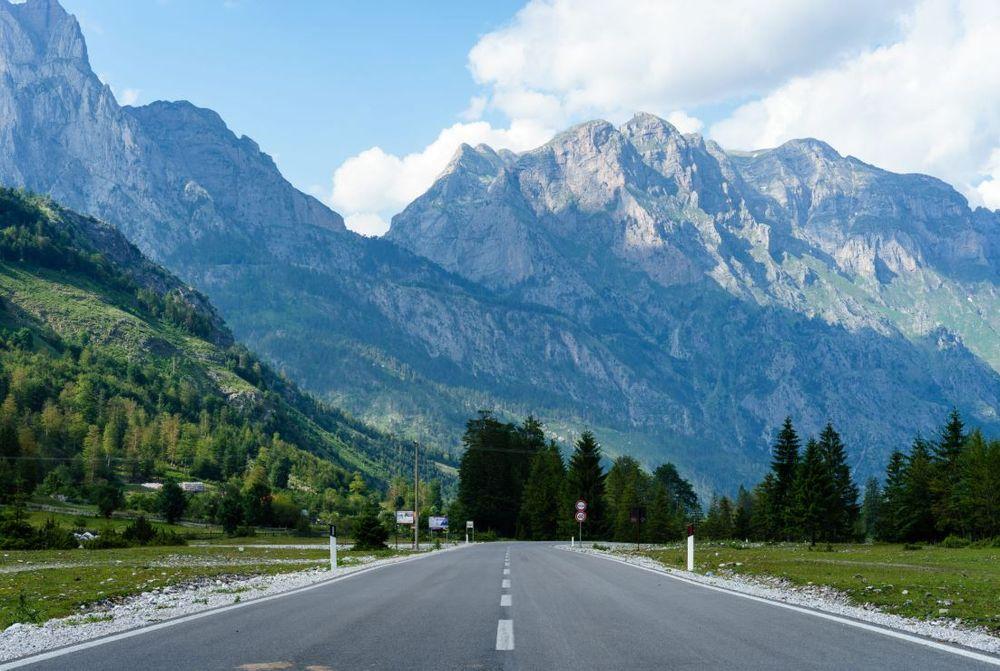
The journey won't always be easy. Roads are rough, trails are rugged, amenities are basic, and comfort takes a back seat to adventure. But that's precisely the point. In these mountains, you'll experience peaks as they were meant to be experienced—wild, authentic, and unforgettable.
Pack your boots, prepare for adventure, and discover why these hidden mountains are capturing the hearts of travelers from around the world. This isn't just a destination—it's an experience that reminds us what true wilderness feels like.
Explore More Parks & Nature
Uncover more parks & nature spots that intrigue you.

Experience the Magic of Shkodër
Explore top-rated spots, art, and culture in Shkodër.