The Museum of Secret Surveillance: " House of Leaves"
Museums
Essential Info
Contact Information
Opening Hours
About
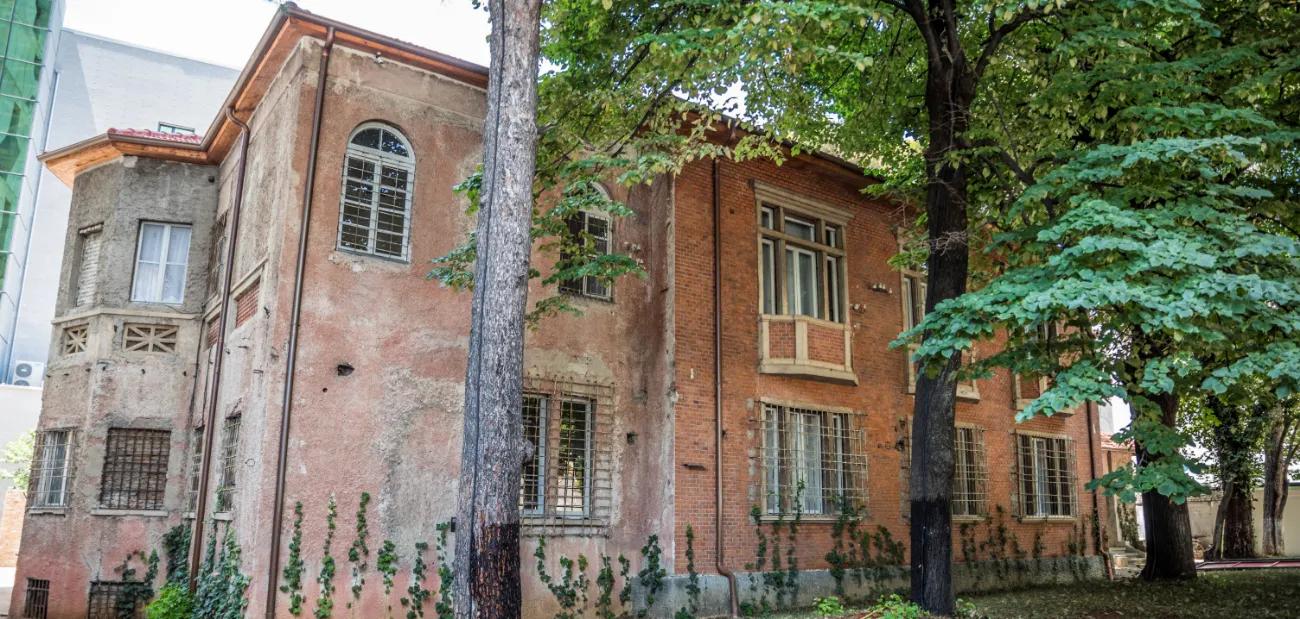
The Museum of Secret Surveillance, known as "House of Leaves" (Shtëpia me Gjethe), occupies one of Tirana's most notorious buildings—the former headquarters of Albania's dreaded Sigurimi secret police. This elegant villa with its distinctive leaf-covered façade conceals a dark history of surveillance, interrogation, and repression that controlled Albanian society for nearly five decades.
Curious about Albania's communist-era surveillance state? Zenith Travel Agency offers specialized tours of House of Leaves and other sites related to Albania's secret police history, providing essential context about how the Sigurimi operated and its lasting impact on Albanian society.
From Italian Consulate to Spy Headquarters
The Building's Pre-Communist Life
The distinctive two-story villa was built in the early 20th century during Albania's brief period of independence before World War II. The Italian-style architecture features elegant proportions and decorative elements typical of interwar Albanian urban design. Before 1944, the building housed the Italian consulate, serving diplomatic functions in Tirana's small international community.
Transformation Under Communism
When Enver Hoxha's communists seized power in 1944, they transformed the villa into the nerve center of Albania's surveillance apparatus. The Sigurimi (State Security Service) operated from this building, coordinating a vast network of informants, conducting interrogations, and maintaining files on hundreds of thousands of Albanian citizens deemed potentially disloyal to the regime.
The building's elegant exterior masked its sinister purpose—neighbors knew to avoid the House of Leaves, understanding that those who entered often never returned, or emerged fundamentally changed by their experience.
Inside Albania's Surveillance State
The Sigurimi: Albania's Secret Police
Albania's State Security Service, commonly known as the Sigurimi, was one of communist Europe's most extensive and brutal secret police organizations. At its peak, the Sigurimi employed an estimated 30,000 agents and informants—creating a surveillance state where approximately one in six adults worked as informers, making Albania one of history's most thoroughly monitored societies.
For those interested in understanding totalitarian surveillance systems and their modern implications, researchers at the University of Tirana's Institute for Democracy and Mediation have documented extensive details about the Sigurimi's operations and its parallels with other secret police organizations across communist Europe.
Methods of Control
The museum's permanent exhibition reveals how the Sigurimi maintained control:
Mass Surveillance: Hidden microphones in homes, offices, and public spaces recorded private conversations. Phone tapping was universal for anyone of interest to the state.
Informant Networks: The Sigurimi recruited informants across all levels of society—neighbors spied on neighbors, colleagues reported on coworkers, and sometimes even family members informed on each other under coercion or conviction.
Psychological Pressure: The knowledge that surveillance was everywhere created a climate of self-censorship and paranoia. People learned to whisper even in their own homes and developed coded language for discussing sensitive topics.
Physical Coercion: For those who wouldn't comply willingly, the Sigurimi employed interrogation techniques ranging from sleep deprivation to physical torture in the building's basement cells.
Forced Confessions: Many prominent Albanians—artists, intellectuals, religious figures—"confessed" to fabricated crimes after prolonged interrogation in this building, leading to imprisonment, internal exile, or execution.
What to Experience at House of Leaves
The Surveillance Equipment Exhibition
The museum displays authentic Sigurimi surveillance technology:
- Hidden cameras disguised as everyday objects (books, clocks, picture frames)
- Bugging devices planted in homes, offices, and vehicles
- Phone tapping equipment used to monitor all international and domestic calls
- Photographic equipment for documenting "suspect" activities
- Recording devices including tape recorders and dictaphones
- Radio interception technology for monitoring foreign broadcasts
The technology ranges from sophisticated imported equipment to crude Albanian-made devices, illustrating both the Sigurimi's resources and the regime's isolation from Western technology markets.
The Interrogation Rooms
Several rooms preserve the atmosphere of Sigurimi interrogations. These spaces demonstrate psychological manipulation techniques—sparse furnishing, strategic lighting, positioning of interrogators versus subjects—designed to break subjects' resistance and extract confessions.
Personal accounts from survivors, displayed throughout these rooms, describe interrogation sessions lasting hours or days, often involving multiple interrogators working in shifts to exhaust subjects into compliance.
The Prison Cells
The building's basement contains small holding cells where suspects awaited interrogation or transfer to Albania's notorious prison camps. These claustrophobic spaces—barely large enough to lie down—held prisoners for days or weeks in conditions designed to soften resistance before formal interrogation began.
The cells' preserved graffiti, carved desperately into walls by previous occupants, provides haunting testimony to their suffering.
Files and Documentation
The museum displays original Sigurimi files showing the bureaucratic machinery of surveillance. These documents reveal:
- Detailed biographical information collected on ordinary citizens
- Reports from informants about their neighbors' private conversations
- Plans for infiltrating religious communities and intellectual circles
- Instructions for "re-educating" or eliminating regime opponents
- Internal communications showing the mundane administrative nature of repression
The Albanian State Authority on Information on Former State Security Documents continues working to catalog the vast Sigurimi archives and provide access to citizens seeking their own files—a process similar to efforts in former East Germany and other post-communist nations.
Personal Stories
Throughout the museum, video testimonials and written accounts from survivors humanize the statistics. Former political prisoners describe their experiences, families explain how surveillance destroyed their lives, and even some former Sigurimi agents reflect on their roles in the system.
These personal narratives transform the museum from a collection of spy gadgets into a memorial to human resilience under totalitarian surveillance.
Planning Your Visit
Location and Access
House of Leaves occupies a central location in Tirana's Bloku neighborhood—ironically, the same area that was restricted exclusively to communist elite during the dictatorship. The building is easily accessible from major attractions and hotels.
How Long to Spend
The museum's intimate size and dense content require different timeframes depending on engagement level:
- Brief overview: 45 minutes - 1 hour (main exhibits only)
- Standard visit: 1.5-2 hours (most exhibitions and testimonials)
- Comprehensive experience: 2-3 hours (everything including all videos)
- Guided tour with Zenith: 2 hours (detailed historical explanations)
Visitor Guidelines
Emotional Content: The museum contains disturbing material including descriptions of torture, surveillance, and political persecution. Visitor discretion advised.
Photography: Generally permitted for personal use without flash. Some specific areas prohibit photography—respect these restrictions.
Quiet Atmosphere: The museum maintains a somber, reflective atmosphere. Keep voices low and phones silenced.
Allow Processing Time: Many visitors find the experience emotionally intense. Take breaks if needed.
Why Visit House of Leaves
Understanding Totalitarian Surveillance
In an era of increasing digital surveillance and privacy concerns, House of Leaves offers sobering lessons about what happens when surveillance becomes comprehensive and unconstrained by legal protections or ethical considerations. The museum demonstrates how surveillance technology combined with authoritarian power creates societies where freedom becomes impossible.
The parallels between Sigurimi methods and modern digital surveillance—though different in scale and technology—make this museum unexpectedly relevant to contemporary debates about privacy, security, and state power.
Explore More Museums
Uncover more museums spots that intrigue you.
.jpg&w=3840&q=75)

Discover the Charm of Tirana
Explore top-rated spots, art, and culture in Tirana.